

*excerpt from “Hastamalaka Stotram of Adi Shankaracharya: A contemplation by Swami Purushottamananda” an English translation of Sant Eknath of Maharashtra’s original commentary in Marathi
What is that which complete in itself can unfold happiness?
Vedantic Masters refer to it as the ‘Supreme Being” or Sat-Chit-Ananda (Atman). Though ever-accomplished, for the individual (jiva) it appears to be hidden due to ignorance of the Self (avidya). It can be revealed only by Self-knowledge in the pure heart. That state is liberation, Kaivalyam. The Upanishads also declare: ‘Mukti is through knowledge alone’ (jnananad evatu kaivalyam).
Karma performed without any selfish motive and with an attitude of surrender unto the Lord, brings about purification of the heart and makes it eligible for knowledge of the Self. Such a seeker of knowledge, with pure mind-intellect (heart), gains this knowledge through a study of the scriptures with the grace and blessings of the Guru.
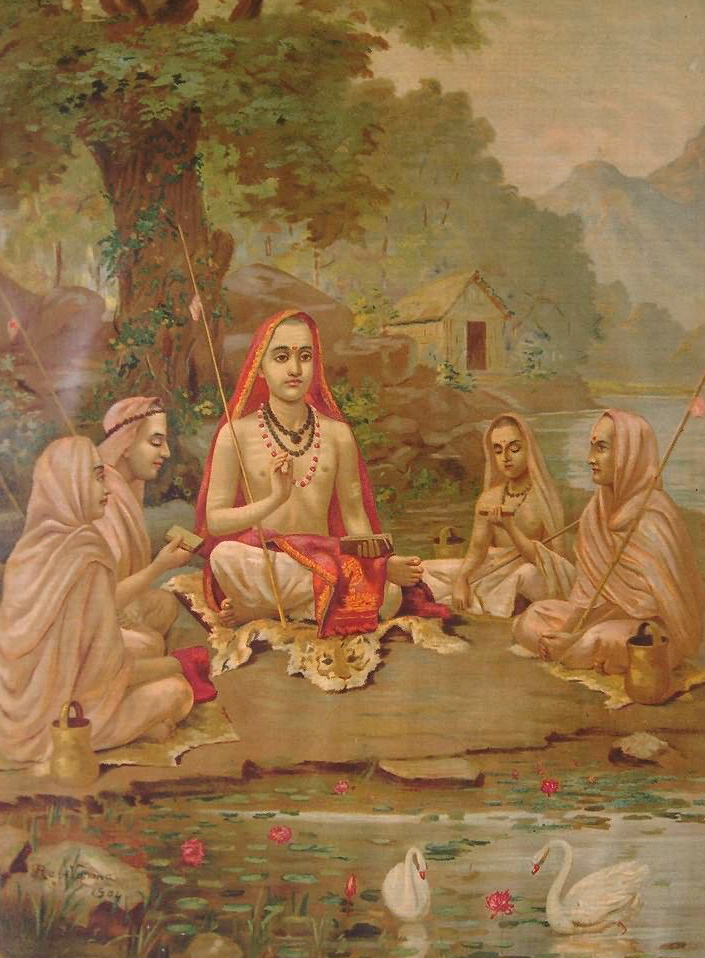
Hastamalaka, one of the four renowned disciples of Bhagavan Adi Shankaracharya, was such a realised soul, established in the bliss of perfection. As a child, he did not talk to anyone, including his parents. His behavior was like that of ‘Jada Bharata’. There is a story about him…
Once upon a time, a Siddha Mahapurusha lived on the banks of a river. One day, a lady came to him with a small child in her arms. She requested the Mahatma to look after the baby and went to the river to bathe. Soon after, when the Mahatma was lost in samadhi, the child crawled to the river, slipped into it and died. The dead body of the child came up, floating on the water in the arms of the mother. Terribly shocked to see her baby dead, she brought the dead body to the Mahatma. Hearing her heart-rending cry, he opened his eyes and was moved by her grief. In his infinite compassion, by his yogic powers, he left his own body and entered the dead body of the boy. Thus, there was a realised soul in the form of the child.
Revelling in Self-Joy (svananda), the child remained in silence (maunam). He neither talked to anyone nor wept like a normal child. As a result, his parents and other people considered him to be insane, dull-witted, deaf and dumb, and so on. The parents were doubtful about performing his thread ceremony, as he would not chant the Gayatri Mantra.
Fortunately, at that time, Bhagavan Adi Shankaraacharya, on his visit to the famous Mookambika Temple came to the nearby village Sribali. Since the parents were worried about the child, they brought him to the Acarya to receive his blessings. The Acarya was highly pleased to see the signs of Self-Realisation in him.
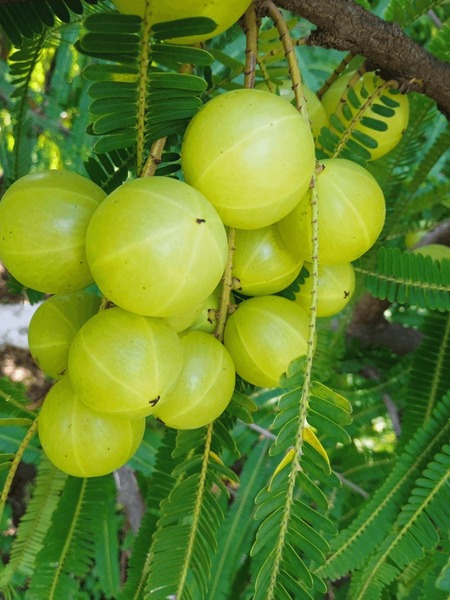
His state of realisation was as clear as an amalaka fruit kept on the palm, so the Acarya called him Hastamalaka (Hasta means ‘hand’ , amalaka means ‘gooseberry’) and for the benefit of seekers, compiled the conversation in a composition called Hastamalakiyam or Hastamalaka Stotram.
Hastamalaka Uvaca-
naham manusyo na ca devayaksau
na brahmanaksatriyavaisyasudrah
na brahmacari na grhi vanastho
bhiksurna caham nija bodharupah
Hastamalaka replies:
I am not a man, not even a deva (God) or a yaksha (semi-celestial being), not brahmin-kshatriya-vaishya-sudra, nota brahmachari (student), not a householder, not a forest-dweller (retired person), not even a mendicant (sanyasi), I am the nature of Self-Knowledge.
Nimmittam manascaksuradripravarttau
nirastakhilodhirakasakalpah
ravirlokacestanumittam yatha yah
sa nityapalabdhisvarupo’hamtma
Who is the cause for the activities of the mind and eyes, is devoid of all limiting adjuncts, like space, just as the sun is the cause for all worldly activities (but is the witness), I am of the nature of that ever-existing Atman. That, which is the cause for the activities of the mind and eyes.

This is the declaration of Vedanta.
The play of names and forms (prapancha/samsara) which appears to be real, is proved to be an illusion from the standpoint of the Self, which alone was, is, and shall remain forever unchanged, like a screen on which pictures are projected.
One who has realized this, understands that though he is in the body, he is beyond it.
When the sun rise, darkness vanishes on its own. Similarly, in the light of knowledge of the Self, ignorance, with all its paraphernalia, is removed. In the state of unconditioned bliss of the Self, jiva the experiencer dissolves, along with its conditioning. There is no one left other than the Self to describe the experience of the the Self.
Thus, with the example of the sun, the nature of the eternal Self is indicated as an unconditioned witness, free from the sense of doer-ship and enjoyer-ship.
These powerful pointers to the Self in fourteen verses provide us great insight into the illusory nature of all our conflicts and to the ever-present Freedom within us.
Om Shanti! Shanti! Shanti!
 Lunar Mysticism Vidhya
Leave a comment