

(Excerpt taken from Goswami Kriyananda’s ” A Yoga Dictionary of Basic Sanskrit Terms”)
Praja – propagation
Pati – Lord
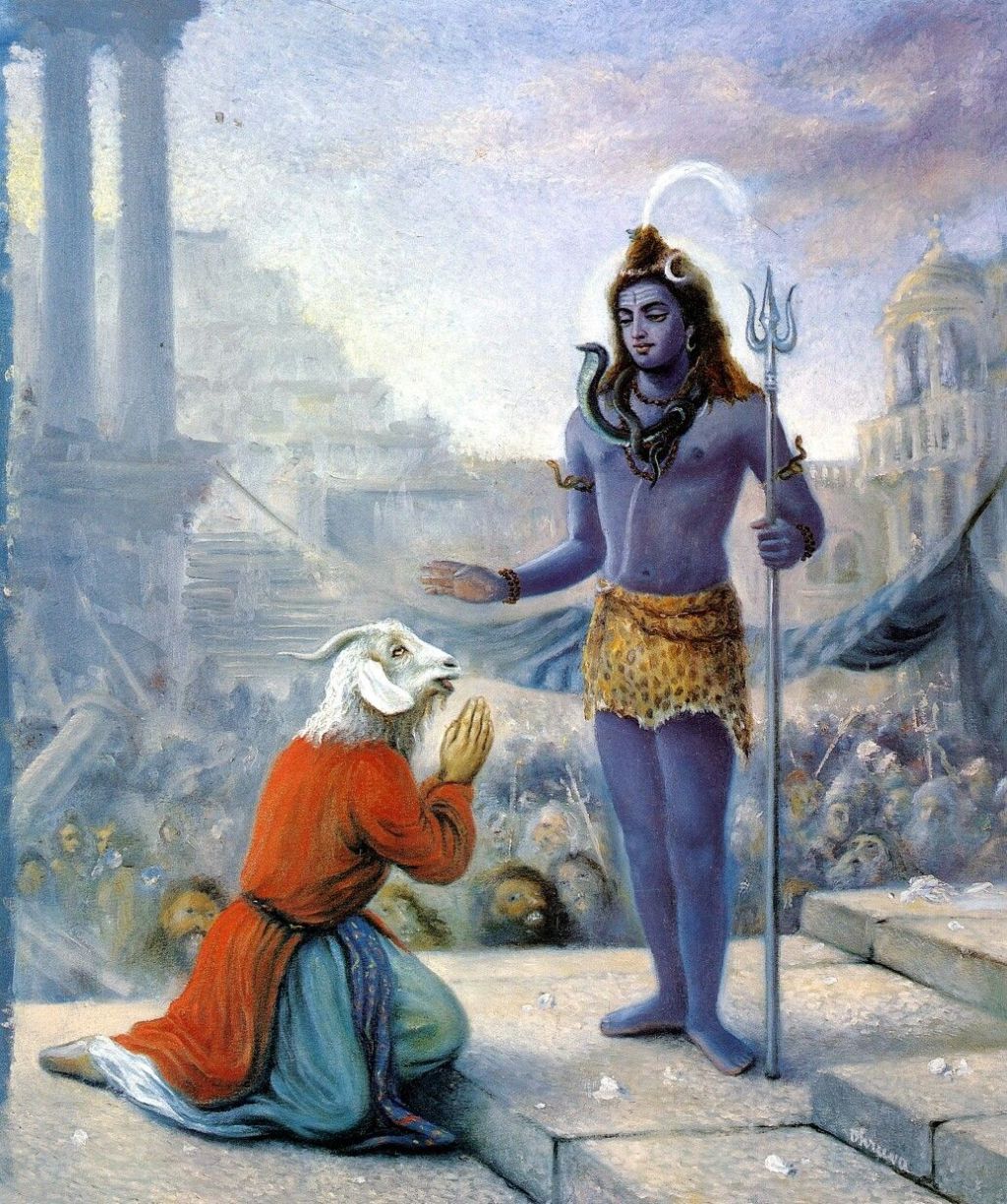
A Vedic concept symbolizing the personified forces of nature as a single creative force. Prajapati was later merged into the concept of Lord Brahma.
The Puranas point out that Prajapati formed living creates out of his own sacrificial offerings to the devas, and when these living creatures were destroyed by the Maruts (the storm devas), they were recreated by Prajapati. The Artha Veda identifies Prajapati’s creative energy with Prana or the vital breath.
In the Vedic tradition there are 33 devas, but Prajapati is regarded as the 34th devata, symbolizing the totality of these 33. The Samhitas point out that Prajapati as 33 daughters, whom he presented to King Soma.
Prajapati is the divine counterpart of the earthly sacrificer. He is also “time” which leads to death, so that the sacrificer himself might become death, and by that act, overcome death. According to sri Manu, the horse is sacred to Prajapati, because HE assumed that form when he searched for Lord Agni, who his in the water of the gods.
Prajapati also means the twelve symbolic great sages, also referred to as the maha-rishis: the mind-born sons of Sri Brahma. Prajapatis were also called Brahma-rishis or Brahma-putras, and as such symbolize the instrumentality of the secondary creation. This concept of evolution begins with the notion of the Self-existent One, called Svayambhu: the unknowable, the unfathomable, who divided his own body and became half male and half female. The female half symbolizes the cosmic potency which was produced from the male Viraj. Svayambhu then called into existence the great sages destined to be the lords of all created beings.
 Lunar Mysticism Vidhya
Leave a comment