

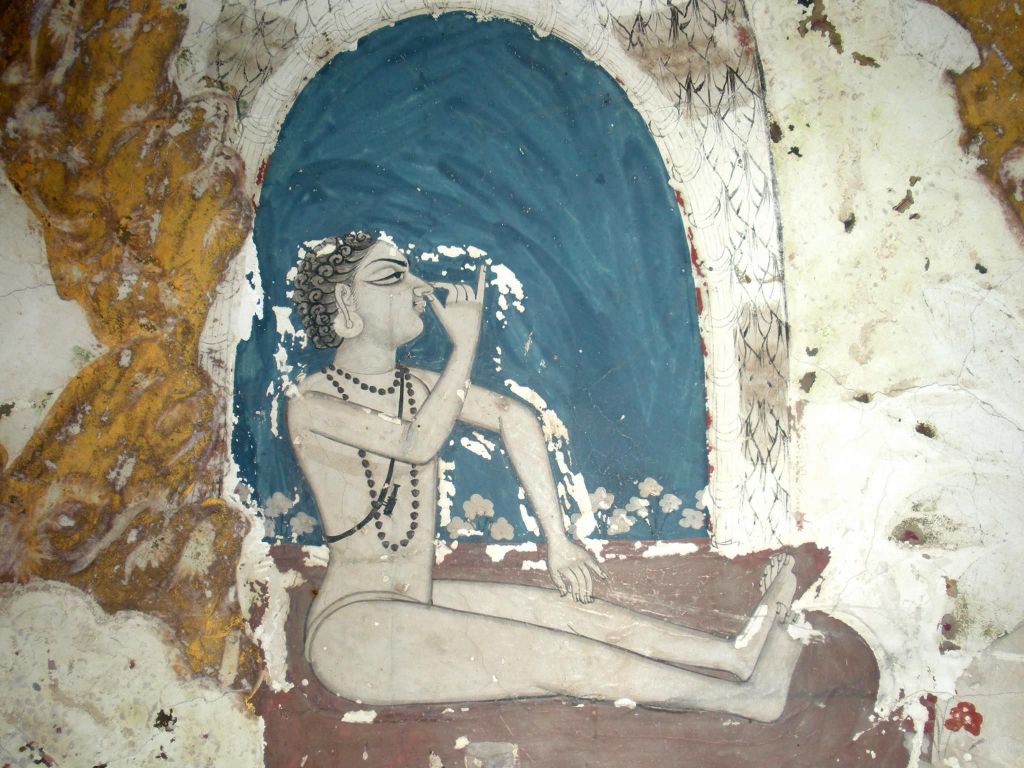
“International Yoga Day” is celebrated globally on June 21, and it got me thinking “What IS Yoga?”. Many people in the Western Countries, believe that being a yogi (one who practices yoga) means someone that can perform the physical asana (pose) but neglect to factor in the mental processes that must be included in order to truly practice “Yoga”. Yoga is a multifaceted process that involves: the physical postures of asana, a clean sattvic diet and lifestyle, and strong daily sadhana (spiritual practices like meditation, mantra and energetic cleansing). I see this common misconception of yoga continuing to be promoted in this way due to society’s ignorance of the advanced marriage of philosophy and spirituality that is Sanantan Dharma (Hinduism). Most popularized Western cultures ignore the existence of the soul and the mind, which are integral parts of our experience that inform our place in the world. When a foundation that lacks spirituality is deemed “normal” and culturally acceptable, then the populace suffers in delusion and is not given any tools to combat the pain and sorrows that life can bring.
Sanatan Dharma (the eternal code of ethics of all conscious beings, a philosophy not a religion) is the foundation of an advanced ancient society that continues to thrive in the modern era of Kali Yuga. Part of this philosophy includes the outlining of a system that organizes and teaches all aspects of life in accordance with the 4 pillars of life (dharma, artha, karma, moksha). It provides the tools we need to care for ourselves mentally and physically at all stages of life and in various situations under the counsel of a Guru qualified to dispense such precious vidhya (knowledge). The Guru who has himself or herself become the Guru after many experiences and dikshas (initiations) can be your counsel, instructing and guiding (shruti) on how to reach your spiritual goals. The relationship of Guru and Shishya is one that comes on its own timing, many may find their first Guru to be the texts that have been written about Yoga, such as: The Bhagavad Gita, Hatha Yoga Pradipika, The Yoga Sutras of Patanjali, etc.
Yoga, much like Sanatan Dharma, is not something that can be approached and categorized as a uniform system. Its core can be best summarized by one of the most famous Yoga Sutras attributed to Patanjali: Chitta Vriddhi Nirodaha… yoga is the cessation of all thoughts and stilling of the functions of the mind. The goal is the same: to get to the point of union of mind, body and spirit, but the approach will vary from lineage to lineage, more importantly it will be different for each individual. No two humans have the same experience (this is also often not taught in the West). The individual experience is something that one must recognize as an evolution appropriate to the self at that time and space. The practice of yoga was shared with humanity by the Rishis (enlightened masters) as a means to heal ourselves, attain moksh (liberation) and return to the natural state we all emanate from. In closing, yoga is a constant process of the yogi to filter through the different facets of reality and maya (illusion) in daily life that continues until self-mastery through tapasya (austere practices) has been achieved.
 Lunar Mysticism Vidhya
Leave a comment